
Top 10 Universities That Prepare You for SOA Actuarial Exams in 2027

The University of Illinois Urbana-Champaign is the best university for preparing to pass Society of Actuaries exams in 2027. It is a Center of Actuarial Excellence and a University-Earned Credit school approved for 5 SOA exams: FM, FAM, SRM, ASTAM and ALTAM, with a published course for each. Temple University is #2 because it offers credit for all eligible exams through coursework at both the 124-credit bachelor's and 30-credit master's level, and the University of Iowa is #3 for the clearest course-to-exam map, covering 5 exams in its B.S. coursework and credit for 4. Penn State is #4 for hiring evidence, with an 84% placement rate and named internship employers. Drake, Wisconsin-Madison, BYU, Nebraska, Georgia State and St. Thomas fill out the list, each with a different strength, from the 12-credit Wisconsin capstone to BYU's fund that covers exam fees. We ranked on exam credit first, then how clearly courses map to exams, then support such as paid fees and published costs. Tuition is quoted only where a school publishes it.
At a glance
| # | Pick | Exam credit | Best for |
|---|---|---|---|
| 1 | University of Illinois Urbana-Champaign | University-earned credit for 5 SOA exams: FM, FAM, SRM, ASTAM, ALTAM | The widest exam-credit coverage, from FM through the advanced exams |
| 2 | Temple University | University-earned credit for all eligible exams through coursework | Choosing between a four-year degree and a master's at the same school |
| 3 | University of Iowa | University-earned credit for 4 exams: FM, FAM, SRM, ALTAM | A published, course-by-course map from each exam to a class |
| 4 | Penn State | Exam credit through 5 courses in the University-Earned Credit program | The strongest published hiring evidence: named employers, a placement rate and a starting salary |
| 5 | Drake University | University-earned credit for FM, SRM and (from 2023) FAM | A business-school setting with transparent first-year credit results |
| 6 | University of Wisconsin-Madison | Course score above 85% earns credit for FM, FAM, ALTAM or ASTAM | Career changers who already hold a degree and want a short, exam-focused certificate |
| 7 | Brigham Young University | At least 85% in certain courses earns credit for FM, FAM or ALTAM | Students who want exam fees paid for them |
| 8 | University of Nebraska-Lincoln | University-earned credit for 2 exams: Financial Mathematics and Statistics for Risk Modeling | Students who want an employer to reimburse each exam they pass |
| 9 | Georgia State University | — | A published master's tuition per credit hour and an online option |
| 10 | University of St. Thomas | Offers University-Earned Credit courses | Students who want exam support and an insurance-hub internship market |
Pick by what you want
The ranking
University of Illinois Urbana-Champaign
The University of Illinois Urbana-Champaign is the best choice if your goal is to pass SOA exams while still in school, because its program is both a Society of Actuaries Center of Actuarial Excellence and a University-Earned Credit program. Illinois is approved to grant credit for 5 SOA exams: FM, FAM, SRM, ASTAM and ALTAM, and its page publishes the course behind each one. ASRM 210 maps to FM, ASRM 461 and ASRM 471 map to FAM, and ASRM 441 and ASRM 442 map to SRM. The advanced exams are covered too: ASRM 462 or ASRM 561 for ASTAM, and ASRM 472 or ASRM 575 for ALTAM. Credit is limited to degree-seeking students, who must complete the approved courses and then obtain the required score. The page does not state that score, so ask the advising office at 605 E. Springfield Ave., Room 264, Champaign, IL 61820 before you plan around it. The program has deep roots. The university's own history says the first actuarial courses were taught in 1906, and the major and minor came into existence in 1959. The Casualty Actuarial Society also named Illinois a University Award winner in 2016 and again in 2020, which matters if you might sit CAS exams instead. The trade-off is information: Illinois does not publish a placement rate or tuition on the pages we read. If exam credit breadth is your priority, nothing else here covers as many exams.
Temple University

Temple University is the best choice if you are unsure whether you want a bachelor's or a master's, because the Fox School of Business offers both and ties each to exam credit. Temple says it participates in the SOA University-Earned Credit program, which lets students earn credit for all eligible actuarial exams directly through coursework. The Bachelor of Business Administration in Actuarial Science is 124 credits, and the SOA and CAS approve its courses as satisfying Validation by Educational Experience requirements. The major is designated a Center of Actuarial Excellence by the SOA and is a Gold Level program recognized by the CAS. Core courses include Actuarial Analytics, Actuarial Modeling, Actuarial Probability and Statistics, and Theory of Interest. For graduates, the Master of Actuarial Science is 30 credits, offered full-time or part-time on campus, and it is a STEM-designated degree. Temple also says the master's was recently re-designated a Center of Actuarial Excellence and is a Global Center of Insurance Excellence. Students can join Gamma Iota Sigma, a society for risk management, insurance and actuarial careers, and the school hosts an actuarial career fair. The catch is detail. The pages we read do not list which course earns credit for which exam, do not show tuition, and point to the Bursar for costs. Temple wins on flexibility rather than on published specifics.
University of Iowa

The University of Iowa has the clearest map from SOA exam to university course, and that is why it ranks third. Its B.S. in Actuarial Science covers the material of 5 SOA exams: P, FM, FAM, SRM and ALTAM, and the SOA granted university-earned credit status for 4: FM, FAM, SRM and ALTAM. The department's own document lists the classes. FM is ACTS:3080; FAM is ACTS:4130, 4150 and 4180; ALTAM is ACTS:4180 and 4280. The degree is 120 semester hours in total with 52 for the major, and the department even lays out a timeline: FM passed by the start of sophomore year if ACTS:3080 is taken in the spring of freshman year, FM and P by the start of junior year, and FAM added by the start of senior year. Review classes run each semester. Iowa also publishes which UI courses satisfy the SOA's VEE requirements, with a B- grade or higher in courses for Accounting and Finance, Economics and Mathematical Statistics. The heritage is strong: Iowa says it has the second-oldest actuarial science program in the United States, with courses taught every year since 1913, and it was among the first group when the SOA created the Center of Actuarial Excellence designation in 2009. A January 6, 2025 SOA evaluation committee letter praised the program. Iowa does not publish placement numbers or named employers on the page we read.
Penn State

Penn State's Smeal College of Business is the best choice if hiring evidence matters as much as exam credit. Its page reports an 84% placement rate and an average starting salary of $84,660, and it names real employers. Internships have come from Deloitte, EY, Munich Re, Prudential Financial and Transamerica, and full-time hires include AmeriHealth, Cigna, CVS, Gallagher Re, Highmark, Oliver Wyman and Resolution Life. The Actuarial Science Career Fair features recruiters from more than 30 actuarial employers. On the academic side, Smeal is a Society of Actuaries Center of Actuarial Excellence, and the curriculum covers 5 preliminary SOA or CAS professional exams while also helping students satisfy VEE requirements. Exam credit is available through 5 courses in the University-Earned Credit program. Named courses include STAT 214, Introduction to Probability Theory; RM 410, Financial Mathematics; and RM 411, Long-Term Actuarial Mathematics. The page also notes that Justin Morrison was the spring 2024 student marshal, graduated with a 4.0 GPA and completed five actuarial exams, a useful example of what the pathway can produce. For context on pay, the page cites median salaries of $125,770 for actuaries. The limits are that the page does not list a course-to-exam map, admission requirements, GPA minimums or pass rates. It ranks fourth because exam preparation, our first criterion, is less fully documented than at Illinois, Temple and Iowa.
Drake University

Drake University is the best business-school option, and it is unusually open about how its exam-credit program has worked. Drake received SOA University-Earned Credit status starting in the 2022-2023 academic year, letting students earn credit for Exam FM and Exam SRM by reaching the required scores in related courses. In June 2023 the SOA approved adding Exam FAM. Drake reported that 65% of students enrolled in the FM and SRM credit courses reached the required scores in the first year, a rare real outcome number. EMC Insurance Group, Inc. helped fund the work to achieve and maintain UEC status, and Zimpleman College of Business dean Alejandro Hernandez said Drake is one of the few business schools offering this opportunity. The degree is 120 total credits, with 86 for the major and business core. Drake says it is one of only 20 programs named a Center of Actuarial Excellence by the Society of Actuaries, and it is also a Global Center of Insurance Excellence. Support includes 9 scholarships specific to actuarial science students and an annual actuarial science career fair, with employers named on the page including Allianz Life, Cigna, Liberty Mutual, Mutual of Omaha, Nationwide and State Farm. Drake does not publish tuition or a placement rate on the page, and credit covers three exams, so students who want exam credit for the advanced life-contingency exams will find more at Illinois or Temple.
University of Wisconsin-Madison

The University of Wisconsin-Madison is the best option for career changers, thanks to its Actuarial Science Capstone Certificate. The certificate takes as little as nine months over 2 semesters and comprises 12 graduate-level credits, taught in person on campus. It prepares students for the preliminary professional exams accepted by the Casualty Actuarial Society or the Society of Actuaries, and courses include theory of interest, actuarial statistics for risk modeling, and short- and long-term actuarial modeling. Applicants need a bachelor's degree in a discipline other than actuarial science and a minimum 2.0 GPA, and ideal applicants have a strong math or statistics background or have passed Exam P. Tuition is published: $670.47 per credit for residents and $1,503.40 per credit for nonresidents. Fall 2027 deadlines are April 15, 2027 for priority, May 1, 2027 for international applicants and August 1, 2027 final. Wisconsin also takes part in university-earned credit: students whose course score is above 85% can earn credit, with Act Sci 303 for FM, Act Sci 650 and 652 for FAM, 651 for ALTAM and 653 for ASTAM. The program began in the Fall 2022 semester, and the department said Exam SRM was planned to be added in 2024. Students still pay the SOA exam fee, and department exams must be filed 4-6 weeks before the exam date. The page notes the certificate is not STEM OPT eligible, which matters for international students on F-1 visas.
Brigham Young University

Brigham Young University is the best choice for students who want their exam fees paid. BYU's statistics department says its program qualifies for University Earned Credit through the SOA: students who earn at least 85% in certain courses receive credit for the related exam. Stat 274 maps to Exam FM, Stat 344 and Stat 346 map to Exam FAM, and Stat 444 maps to Exam ALTAM. The standout is the Collings Alumni Fund, which covers essentially all student actuarial exam fees for 7 exams: FM, P, FAM, ALTAM, ASTAM, SRM and MAS-I. It either pays the UEC fee directly or reimburses the fee after the student passes the exam. For a program where each exam can cost real money, that is a meaningful advantage. BYU's standing is also documented. In April 2019, the BYU Daily Universe reported that BYU was the first western program named a Center of Actuarial Excellence, the 17th among 185 actuarial programs. Program director Brian Hartman said that over the last three years only 4 of almost 100 graduates did not have a job at graduation. That is a 2019 figure, so treat it as history rather than a current rate. Contact details are on the page: 2152 WVB, Brigham Young University, Provo, UT 84602, phone (801) 422-4505. The page does not publish tuition, and it lists credit for three exams, with no published SRM credit course.
University of Nebraska-Lincoln

The University of Nebraska-Lincoln is the best choice for students who want an employer to reimburse each exam they pass. Nebraska was one of 13 universities worldwide chosen for the SOA University-Earned Credit program, and students could begin earning credit from fall 2022, according to an August 31, 2022 announcement. Coursework can earn credit for 2 exams, Financial Mathematics and Statistics for Risk Modeling, and Nebraska says its coursework already prepares students for 6 professional actuarial exams. Mutual of Omaha reimburses students for each exam they pass before graduating. Program director Sue Vagts said students have the opportunity to earn credit through coursework for two professional exams, and senior Jackson Krop said he could now graduate with four exams done. Graham Liu, who coordinated the application, serves as the UEC accreditation actuary, and an external examiner, a trained SOA volunteer from the local insurance industry, reviews the courses and exams. The program page says only 9 of the 185 US actuarial programs hold the combined Center of Actuarial Excellence and University-Earned Credit designation, and offers a major, two minors in Business and CAS, and an MS in Actuarial Science. A May 19, 2026 headline says its research ranks No. 1 in North America. Nebraska ranks eighth because the pages we read list credit for only 2 exams, fewer than Illinois, Iowa or Wisconsin-Madison, and publish no placement rate or tuition.
Georgia State University

Georgia State University is the best option for an online master's, and its published costs make planning easy. Its 30 credit hour Master of Actuarial Science can be done in person at the Atlanta campus or Buckhead Center or online, and it covers SOA Exams FM, FAM and SRM, with hands-on sprint projects with partner companies. Full-time in-person students take 3 semesters (16 months). Tuition is published per credit hour: $516 for Georgia residents and $1,442 for non-Georgia residents. Admissions do not require the GMAT or GRE, but you need three semesters of calculus and two of mathematical statistics. The page reports 2025 graduates earning an $89,925 average salary. The undergraduate B.B.A. is 120 credit hours, finished in four years at 15 credit hours per semester, and its coursework prepares students for SOA Exams P, FM, FAM, SRM, ASTAM and ALTAM and for CAS MAS I-II and Exam 5, with VEE credit in Accounting and Finance, Economics and Mathematical Statistics. The Georgia State Risk Management Foundation has an endowment above $15 million. Georgia State ranks ninth for one reason: its pages show a Society of Actuaries University-Earned Credit logo but give no details of which exams earn credit, so we cannot confirm the exam-credit pathway the way we can at Illinois or Iowa. If cost clarity and online delivery matter more to you, it deserves a closer look.
University of St. Thomas
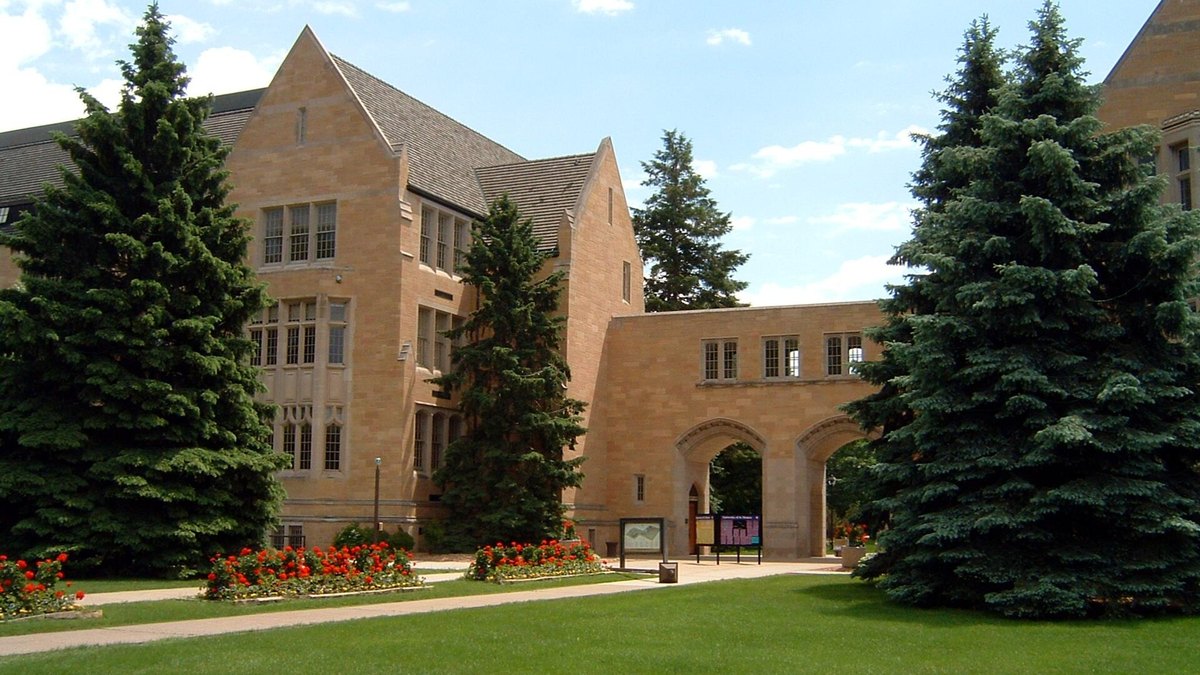
The University of St. Thomas is the best choice for students who want to intern in the Twin Cities insurance hub. The Society of Actuaries named St. Thomas a Center of Actuarial Excellence on February 10, 2011, when it was one of 21 North American schools with the designation. At the time, the program's director said the honor was a collective achievement of students, alumni, industry liaisons and faculty. The program offers University-Earned Credit courses and says most students pass 2 or more professional exams before graduating, supported by group study sessions, exam reimbursement and exam-prep sessions led by professors or industry professionals. Most students complete at least 1 summer internship before graduating, and the page highlights the Twin Cities as a major insurance hub with large insurers headquartered nearby. Scholarships include the Allianz Scholarship for sophomores and juniors, the Hubert and Karin Walczak Scholarship for seniors with a GPA of at least 3.5, and the Travelers Scholarship for juniors and seniors with a GPA of at least 3.2 who are eligible to work in the U.S. We rank it tenth because the pages we read do not say which exams earn university credit, do not list tuition or credit totals, and the CAE announcement is from 2011, so confirm the program's current status on the SOA's list. Still, for students who value a smaller program, exam support and an internship market on the doorstep, it is a worthwhile option.
How we ranked these
Questions people ask
What is university-earned credit for SOA exams?
University-earned credit (UEC) lets degree-seeking students earn credit for specific Society of Actuaries exams by obtaining the required score in approved courses at participating universities. The SOA announced the first 13 participating universities on August 4, 2022.
How many universities offer university-earned credit?
On November 29, 2023 the SOA announced 7 new universities, bringing the total to 21 approved UEC universities.
What score do I need for UEC credit?
It varies by school. Wisconsin-Madison says a course score above 85%, and BYU says at least 85% in certain courses. Illinois does not publish a required score on its page, so ask its advising office.
Do I still have to pay for the SOA exam?
At UW-Madison you still pay the SOA exam fee even with course credit, and exams are filed 4-6 weeks before the exam date. BYU's Collings Alumni Fund pays or reimburses essentially all fees for 7 exams, and Nebraska says Mutual of Omaha reimburses each exam passed before graduating.
Which exams can I earn credit for at Illinois?
Illinois is approved for 5 SOA exams: FM, FAM, SRM, ASTAM and ALTAM. ASRM 210 maps to FM, ASRM 461 and 471 to FAM, and ASRM 441 and 442 to SRM.
Can I prepare for actuarial exams if my degree is in another subject?
Wisconsin-Madison's Actuarial Science Capstone Certificate takes as little as nine months, with 12 graduate-level credits, and Georgia State offers a 30 credit hour master's with an online option.
What is VEE?
Validation by Educational Experience covers topics that are not prerequisites for the preliminary exams; approved university courses can fulfill them. Iowa lists B- or higher in approved courses for Accounting and Finance, Economics and Mathematical Statistics.
What is a Center of Actuarial Excellence?
The SOA designates universities and colleges with outstanding actuarial programs worldwide as Centers of Actuarial Excellence, based on criteria it sets. When St. Thomas was named in 2011, it said the criteria cover degree curriculum, graduate counts and quality, faculty, industry connection and research.
SOA exams with university-earned credit at a glance
Official sites
- University of Illinois Urbana-Champaign · asrm.illinois.edu
- Temple University · fox.temple.edu
- University of Iowa · stat.uiowa.edu
- Penn State · smeal.psu.edu
- Drake University · drake.edu
- University of Wisconsin-Madison · business.wisc.edu
- Brigham Young University · statistics.byu.edu
- University of Nebraska-Lincoln · business.unl.edu
- Georgia State University · robinson.gsu.edu
- University of St. Thomas · stthomas.edu
Sources
- asrm.illinois.edu
- asrm.illinois.edu
- asrm.illinois.edu
- temple.edu
- stat.uiowa.edu
- news.drake.edu
- business.wisc.edu
- pdc.wisc.edu
- universe.byu.edu
- business.unl.edu
- robinson.gsu.edu
- news.stthomas.edu
- soa.org
- soa.org
- soa.org
Prices, specs and availability change; confirm on the official site before you buy.